
TL;DR
- Nobody is legally responsible for the hurricane itself, but a property owner, landlord, or business can be responsible for how it handled hazards before and after the storm.
- The key question is usually time and knowledge: did the owner know, or should it have known, about a dangerous condition, and did it act within a reasonable time?
- CDC guidance identifies falls, electrocution from downed power lines, chain saw injuries, carbon monoxide from generators, and floodwater as the main post-storm hazards.
- Many cleanup injuries are nobody else's fault, so it's worth separating injuries caused by your own work from injuries caused by someone else's neglect.
- Claims involving public property or government entities follow stricter notice rules, which makes it important to identify who owns the property quickly.
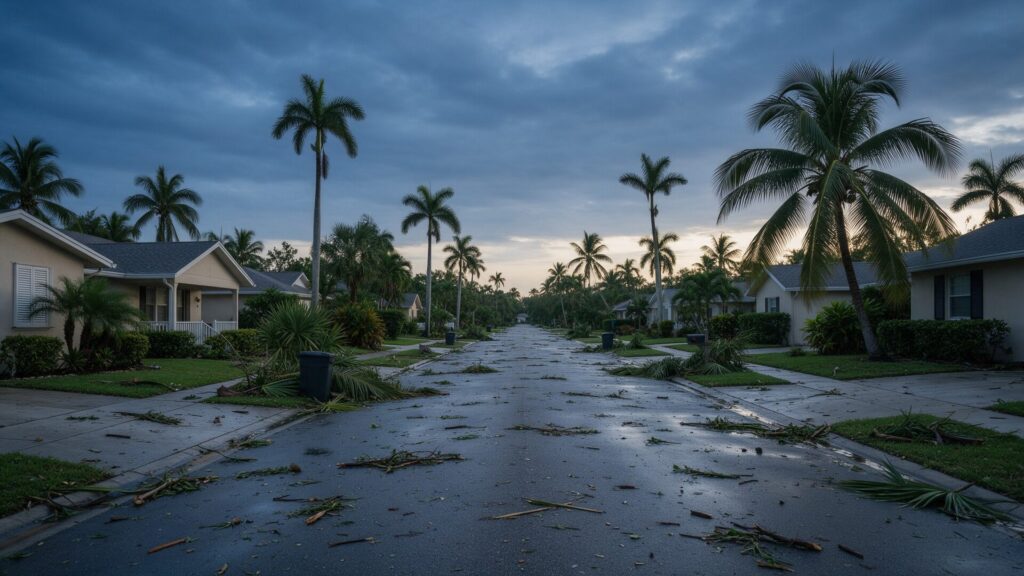
The storm passes, the wind stops, and the real hazards often begin: debris-covered streets, tree limbs resting on power lines, flooded walkways, damaged stairwells, and generators running in the wrong places. Atlantic hurricane season runs through November 30, so these risks are a live concern for Miami-Dade residents right now. Understanding when a post-storm injury is just bad luck and when it's connected to someone's failure to act is the starting point for any claim.
The Storm Isn't Anyone's Fault. The Response Can Be.
A hurricane is not something a property owner caused, and Florida law doesn't treat the storm itself as negligence. What the law looks at is conduct: whether an owner or operator failed to secure the property beforehand, failed to inspect it afterward, failed to repair or block off a known hazard, or failed to warn people who were likely to be hurt.
The standard is reasonableness, and it moves with the circumstances. A business that hasn't yet cleared a fallen branch a few hours after landfall is in a very different position from one that left a broken, water-soaked walkway open for weeks. Owners aren't expected to fix everything instantly, but they are expected to act sensibly once they know, or should know, about a danger.
Where Post-Storm Injuries Actually Happen
According to the CDC's NIOSH guidance on hurricane and flood response, the most common serious hazards after a hurricane include falls in muddy, slippery, debris-covered conditions, electrocution from downed power lines and storm-damaged electrical systems, injuries from chain saws and tree removal, carbon monoxide poisoning from generators and other fuel-burning equipment, and the unseen hazards in floodwater, such as debris, sharp objects, and sudden changes in water depth. The same guidance notes that same-level falls from slips and trips are more common than falls from heights, though falls from ladders and roofs are more likely to be fatal.
This list is useful for a claim because it shows what a reasonable property owner should anticipate. Wet floors, scattered debris, and compromised electrical systems after a major storm are not surprising conditions, and that matters when the question is whether an owner should have known about them.
Many Post-Storm Injuries Are Nobody Else's Fault
It's worth being honest about this. A large share of hurricane injuries happen while people clean up their own property: a fall from their own ladder, a slip while hauling debris, a chain saw accident on their own tree. Those injuries generally don't create a claim against anyone else, unless defective equipment or another person's negligence played a role.
A claim becomes realistic when the dangerous condition was someone else's responsibility: a landlord who ignored a reported hazard, a business that kept its doors open with an obviously unsafe entrance, or a property manager who let storm-damaged common areas stay open to residents and guests.
Businesses and Commercial Property
When a person slips and falls on a transitory substance in a business, such as standing water, mud tracked inside, or storm debris, Florida Statute §768.0755 requires the injured person to prove the business had actual or constructive knowledge of the dangerous condition and should have taken action to fix it. Constructive knowledge can be shown by circumstantial evidence, such as the condition having existed long enough that the business should have noticed it, or the condition occurring regularly enough to be foreseeable. The statute also makes clear that it doesn't erase a business's other duties of care over its premises.
After a widely known storm, the argument that a hazard was a surprise can be harder to make, particularly if the water intrusion or debris was visible, ongoing, or reported. That's an evidence question, not an automatic win, but it's the reason documenting how long a hazard existed is so important.
Landlords and Apartment Complexes
Rental properties raise a separate set of duties. Under Florida Statute §83.51, a landlord must comply with applicable building, housing, and health codes and keep structural components like roofs, windows, walls, and plumbing in good repair, and for multi-unit properties, keep common areas in reasonably safe condition. A storm can damage any of those, and the question becomes what the landlord did once it knew.
A reported roof leak that goes unrepaired can turn into a collapsing ceiling, exposed wiring, or standing water in a stairwell. It can also turn into the kind of moisture problem covered in our guide to mold and habitability injury claims. And storm-weakened railings and balconies raise the structural concerns discussed in our post on balcony and railing collapse claims. In each situation, written notice to the landlord and a record of its response are among the most valuable pieces of evidence.
Public Property and Government Entities
Parks, sidewalks, public buildings, and many roadways belong to government entities, and claims against them run through Florida's sovereign immunity statute, §768.28. That statute imposes pre-suit written notice requirements and caps on damages that don't apply to private owners, as explained in our guide to playground injury claims. After a storm, when a fallen tree or damaged sidewalk may be on public land, working out who owns the property early can protect a claim that would otherwise be lost to a missed deadline.
Downed Power Lines
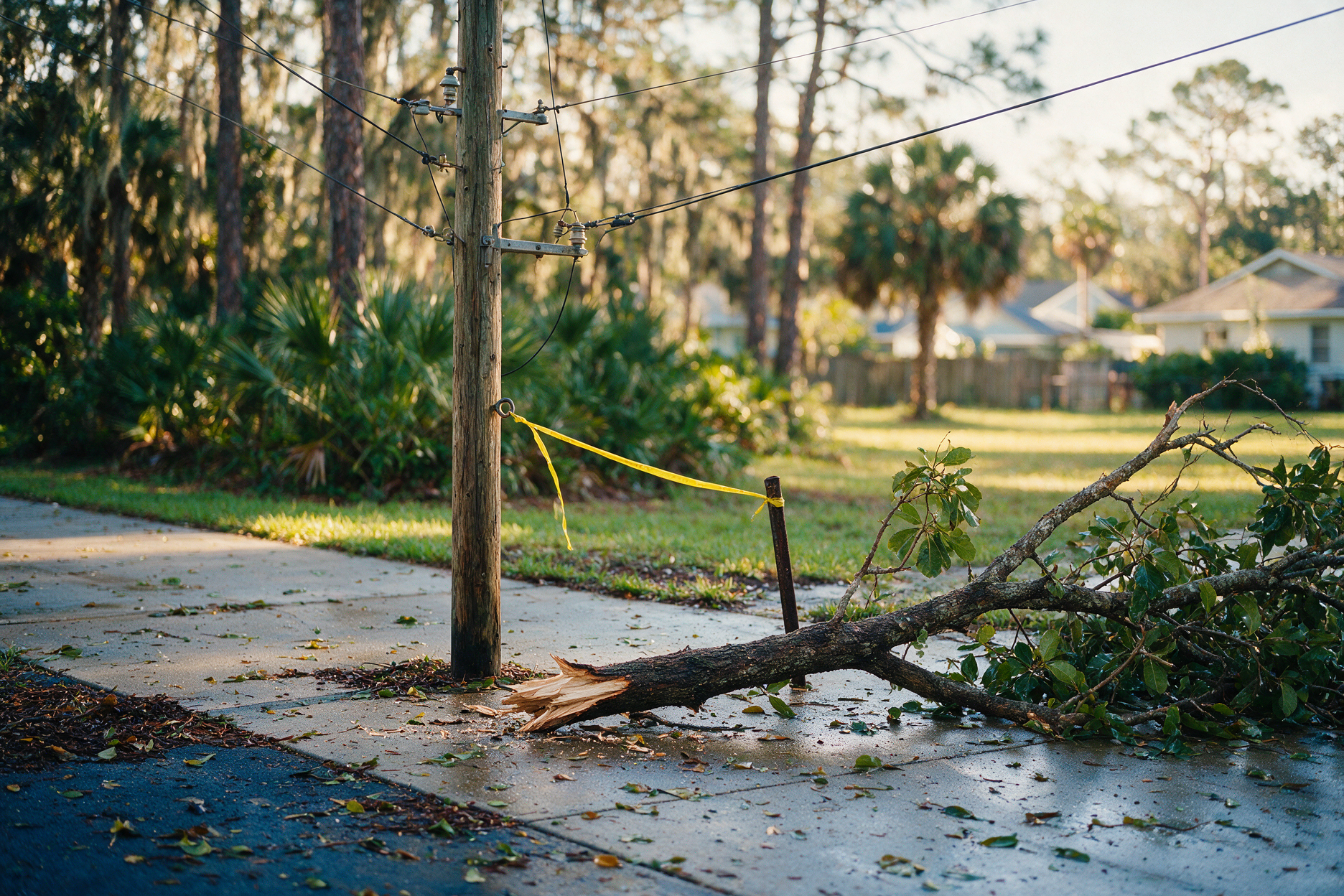
The CDC and NIOSH guidance is blunt about downed lines: never touch one, treat everything electrical as energized until tested, and don't work near a downed line unless it has been confirmed that utility workers have turned off the power. It also warns that standing water, wet circuits, and even buildings that were previously flooded can remain electrocution hazards, and that a generator connected directly to a building's wiring can send power back into the grid, a hazard known as backfeeding.
Claims involving utilities, tree contractors, or neighbors operating generators can be legally complicated, and they depend heavily on who controlled the hazard and what notice they had. If you or a family member was hurt around a downed line, the details of when it was reported, who responded, and how long it stayed energized matter a great deal.
Generators and Carbon Monoxide
According to the same CDC guidance, generators and other fuel-burning equipment should never be used inside a home, basement, garage, or other enclosed space, or within 20 feet of a window, door, or vent, and a single generator can produce as much carbon monoxide as hundreds of cars. Most carbon monoxide injuries stem from someone's own generator use. But when the generator was placed by a property manager, a contractor, or another resident in a way that exposed people in neighboring units, the question of responsibility shifts.
Evidence to Capture Before Cleanup Erases It
- Photos and video of the hazard exactly as you found it, before anything is moved, cleared, or repaired
- The timeline: when the storm passed, when the hazard was first visible, and when anyone was told about it
- Written complaints or notices sent to a landlord, property manager, or business, plus any replies
- Utility outage and downed-line reports, including report numbers and times
- Witness names and contact information from neighbors, residents, or employees who saw the condition
- Medical records that tie your injuries to the date and location of the incident
What to Do If You're Hurt After a Storm
- Get medical attention first, and tell providers exactly how the injury happened
- Document the scene as soon as it's safe to do so, but never approach a downed line or flooded electrical hazard to do it
- Report the incident in writing to whoever manages the property
- Identify the owner, including whether the property is public or private
- Keep your receipts and records, since storm-related claims often involve many overlapping expenses
Fault can also be shared. Florida's comparative negligence rule can reduce a recovery if an insurer argues your own choices, such as ignoring a barrier or entering a flooded area, contributed to the injury.
Frequently Asked Questions
Can I sue because a hurricane injured me?
Not over the hurricane itself. A claim depends on whether a specific person or entity was negligent in handling a hazard, such as failing to repair, warn about, or block off a danger it knew about or should have known about.
Is a business liable for water or debris left inside after a storm?
Potentially. Under Florida law, the injured person generally must show the business had actual or constructive knowledge of the hazard and should have acted, which often turns on how long the condition existed.
What can I do if my landlord ignored storm damage in my building?
Put the problem in writing, document it with photos, and keep a record of any response. A landlord's duty to maintain structural components and comply with health and building codes continues after a storm.
Is it different if the property is owned by a city or county?
Yes. Claims against government entities involve pre-suit notice requirements and damage caps under Florida's sovereign immunity statute, which makes identifying the owner early important.
I was hurt cleaning up my own yard. Do I have a claim?
Usually not, unless defective equipment or someone else's negligence contributed. Injuries from your own cleanup work generally aren't anyone else's responsibility.
How long do I have to file a claim for a post-storm injury?
Deadlines depend on the type of claim and who is responsible, and they're shorter and stricter for government entities. It's worth having an attorney review your timeline soon after the injury.
The Bottom Line
A hurricane creates the conditions, but the law cares about what people did with those conditions once they knew about them. If you were hurt by a hazard that an owner, landlord, or business should have addressed, the details of timing, notice, and ownership will decide whether you have a claim. DLE Lawyers offers a free consultation to review what happened and what evidence still needs to be preserved.