

TL;DR
- Playground-related injuries send an average of over 190,000 children to emergency rooms nationally each year, with equipment failures and falls together accounting for the large majority of incidents.
- Property owners and operators are expected to follow recognized safety standards, including the CPSC's Public Playground Safety Handbook, even though those guidelines are voluntary rather than legally mandatory.
- If the playground is on public property — a city park, a public school — your claim runs through Florida's sovereign immunity statute, which imposes strict notice deadlines and caps on damages that don't apply to private property claims.
- Common causes include inadequate fall-zone surfacing, poorly maintained equipment, entrapment hazards, and insufficient spacing between structures.
- Identifying whether the property is public or private should be one of the first things you determine, since it changes the entire legal process.
Playgrounds are supposed to be one of the safest places for kids to take real risks — climbing, swinging, testing their balance — within an environment designed to catch them when something goes wrong. When the equipment itself, the surfacing underneath it, or the maintenance behind it fails to do that job, a normal part of childhood can turn into a serious, sometimes permanent injury. Understanding how Florida law treats these claims, and why the type of property matters as much as the injury itself, is where a real claim starts.
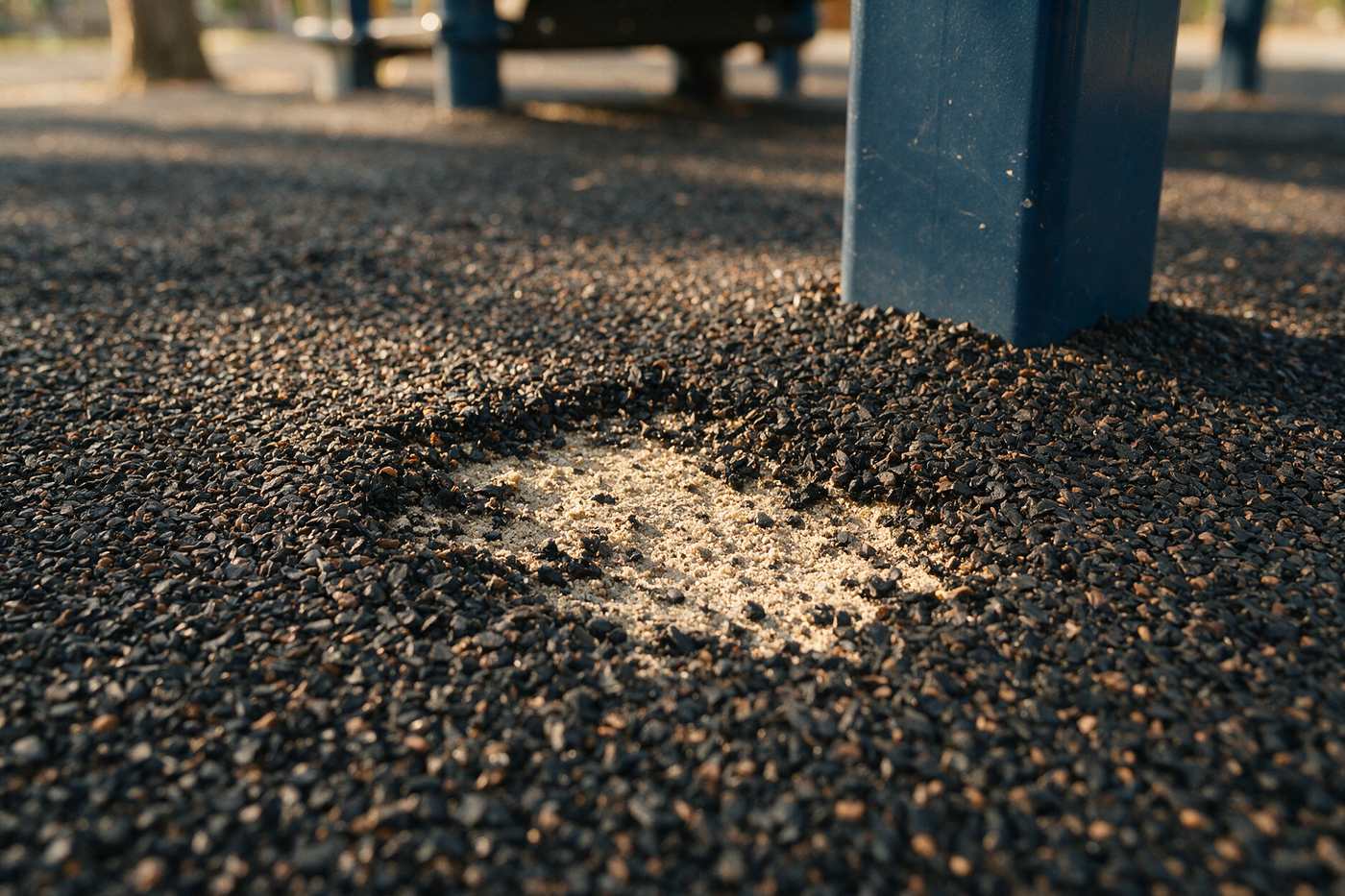
According to the CPSC's Public Playground Safety Handbook, playground equipment sent an average of over 190,000 children to emergency rooms annually from 2021 to 2023, with equipment-related hazards and falls together accounting for the large majority of reported incidents. The handbook exists precisely because these injuries are common enough, and often severe enough, to warrant a dedicated national safety framework covering equipment design, surfacing, spacing, and maintenance.
That framework isn't a law — it's voluntary guidance. But voluntary doesn't mean irrelevant to a legal claim. Courts and insurers routinely treat recognized industry standards like the CPSC handbook, and the related ASTM F1487 equipment specification, as evidence of what a reasonably prudent property owner or operator should have been following, even without a statute mandating it directly.
Why Public vs. Private Property Changes Everything
This is the single most important fork in the road for a Florida playground injury claim. A playground at a private daycare, a private apartment complex, or a privately owned business follows ordinary premises liability rules — the same framework that applies to a slip-and-fall or a swimming pool injury claim. A playground at a public park, a public school, or another government-owned facility is a different legal animal entirely.
Under Florida Statute §768.28, Florida's sovereign immunity statute, the state and its subdivisions have only a limited, conditional waiver of immunity from lawsuits. That waiver comes with real teeth: a strict pre-suit written notice requirement to the responsible agency and the Florida Department of Financial Services, generally within three years of the incident, and hard caps on recoverable damages — currently $200,000 per person and $300,000 per incident. There's no punitive damages available against a government entity at all. Missing the notice deadline, or sending it to the wrong agency, can bar an otherwise valid claim entirely, regardless of how serious the injury.
This means one of the very first things worth determining after a playground injury is who actually owns and maintains the property. A claim that would otherwise be straightforward against a private property owner becomes a claim with a compressed timeline, a damages ceiling, and a specific procedural gauntlet if the playground turns out to be public. Florida's Division of Risk Management is the agency that actually processes these notices of claim against state agencies, and its process page lays out exactly where a written notice needs to go.
Common Causes of Playground Injuries
- Inadequate fall-zone surfacing, where hard surfaces like asphalt or compacted dirt sit under equipment instead of CPSC-recommended impact-absorbing material
- Poorly maintained equipment, including rusted chains, cracked plastic components, or loose bolts and connections
- Entrapment hazards, openings in equipment sized in a way that can catch a child's head, limb, or clothing
- Insufficient use-zone spacing, where equipment is placed too close together, increasing collision risk during active play
- Excessive equipment height without matching surfacing depth, creating a mismatch between fall risk and impact protection
- Inadequate supervision at supervised facilities, such as daycares or camps, where a duty to actively monitor children exists separate from the condition of the equipment itself
Evidence That Determines These Cases
- Photos of the equipment and surfacing condition, taken as soon as possible after the incident and before any repairs are made
- Maintenance and inspection records, which may need to be formally requested, particularly from a government entity
- Prior incident reports, showing whether similar injuries had already occurred on the same equipment
- Measurements of fall height and surfacing depth, which can be compared directly against CPSC guidelines
- Witness accounts of supervision at the time, particularly relevant at daycares, camps, or other supervised settings
Why the CPSC Handbook Update Matters Right Now
The CPSC issued a significant update to its Public Playground Safety Handbook in 2025, the first major revision since 2010, incorporating updated ASTM standards and current national injury data. The update expanded guidance on several specific hazard categories, including entanglement risks from drawstrings and helmet chin straps, fencing and gate specifications designed to prevent crush injuries, and clearer standards for surfacing materials.
This matters for a claim because it shifts what counts as the current, recognized standard of care. A playground built or last inspected under the older 2010 guidelines may already be behind the updated recommendations in ways that weren't previously flagged as deficiencies. Whether a property owner has kept pace with the revised handbook, or is still relying on a decade-old inspection standard, can be a meaningful part of establishing whether ordinary maintenance was actually reasonable.
What to Do After a Playground Injury
- Get medical attention first, and keep detailed records connecting the injury to the specific incident
- Photograph the equipment, the surfacing, and the general condition of the area before anything is repaired or altered
- Identify the property owner or managing entity, and specifically determine whether it's public or private property
- If the property might be government-owned, don't wait to find out, since the notice clock under Florida's sovereign immunity statute starts running from the date of the incident
- Report the incident in writing to whoever manages the property, and request any existing maintenance or inspection records
If the property involves premises liability concerns beyond the playground equipment itself — inadequate lighting, negligent security around the area, or broken fencing — those issues are worth documenting too, since a single incident can sometimes involve more than one type of property failure.
Frequently Asked Questions
Is a playground operator legally required to follow CPSC safety guidelines?
Not by direct legal mandate — the CPSC handbook is voluntary guidance. But courts and insurers commonly treat it as evidence of the standard of care a reasonably prudent operator should have followed.
Does it matter if the playground is at a public park versus a private business?
Yes, significantly. Public property claims go through Florida's sovereign immunity statute, with strict notice deadlines and damage caps that don't apply to private property claims.
What's the notice deadline for a claim against a public playground's owner?
Generally three years from the date of the incident under Florida Statute §768.28, though the specific timeline and procedure should be confirmed with an attorney given how strictly these requirements are enforced.
Are there damage caps on claims against a government-owned playground?
Yes, currently $200,000 per person and $300,000 per incident under Florida's sovereign immunity statute, with no punitive damages available.
What if my child was injured due to a lack of supervision at a daycare or camp?
That's a separate but related issue from the condition of the equipment itself — supervised facilities have an independent duty to actively monitor children, and inadequate supervision can support a claim even where the equipment itself was in good condition.
How long do I have to file a claim for a playground injury on private property?
Deadlines differ from the public-property notice requirement discussed above, and should be reviewed with an attorney based on the specific facts of the injury.
The Bottom Line
A playground injury claim isn't just about what went wrong with the equipment — it's about who's actually responsible for that equipment, and whether that responsible party is a private business or a government entity operating under a very different set of rules. Figuring out which one you're dealing with early can be the difference between a claim that proceeds normally and one that gets barred by a missed deadline. DLE Lawyers offers a free consultation to review what happened and determine the right path forward.