

TL;DR
- Florida requires nearly all elevators and escalators to be inspected annually by a certified elevator inspector under Florida Statute Chapter 399.
- Liability can fall on the property owner, a maintenance contractor, or the equipment manufacturer, depending on what actually caused the failure.
- Florida law specifically requires elevator accidents to be reported to state regulators, which creates a paper trail worth requesting early.
- Common causes include deferred maintenance, sudden stops or drops, door malfunctions, and escalator entrapment involving clothing, shoes, or loose items.
- Because elevators and escalators are mechanical systems, these cases often require an inspection or maintenance history, not just an account of the incident itself.
Elevators and escalators are supposed to be some of the most routine, unremarkable parts of daily life — until they're not. When a malfunction causes a fall, a sudden drop, or an entrapment injury, the question of who's responsible often comes down to inspection records and maintenance history that most injured people never think to ask about until it's too late.
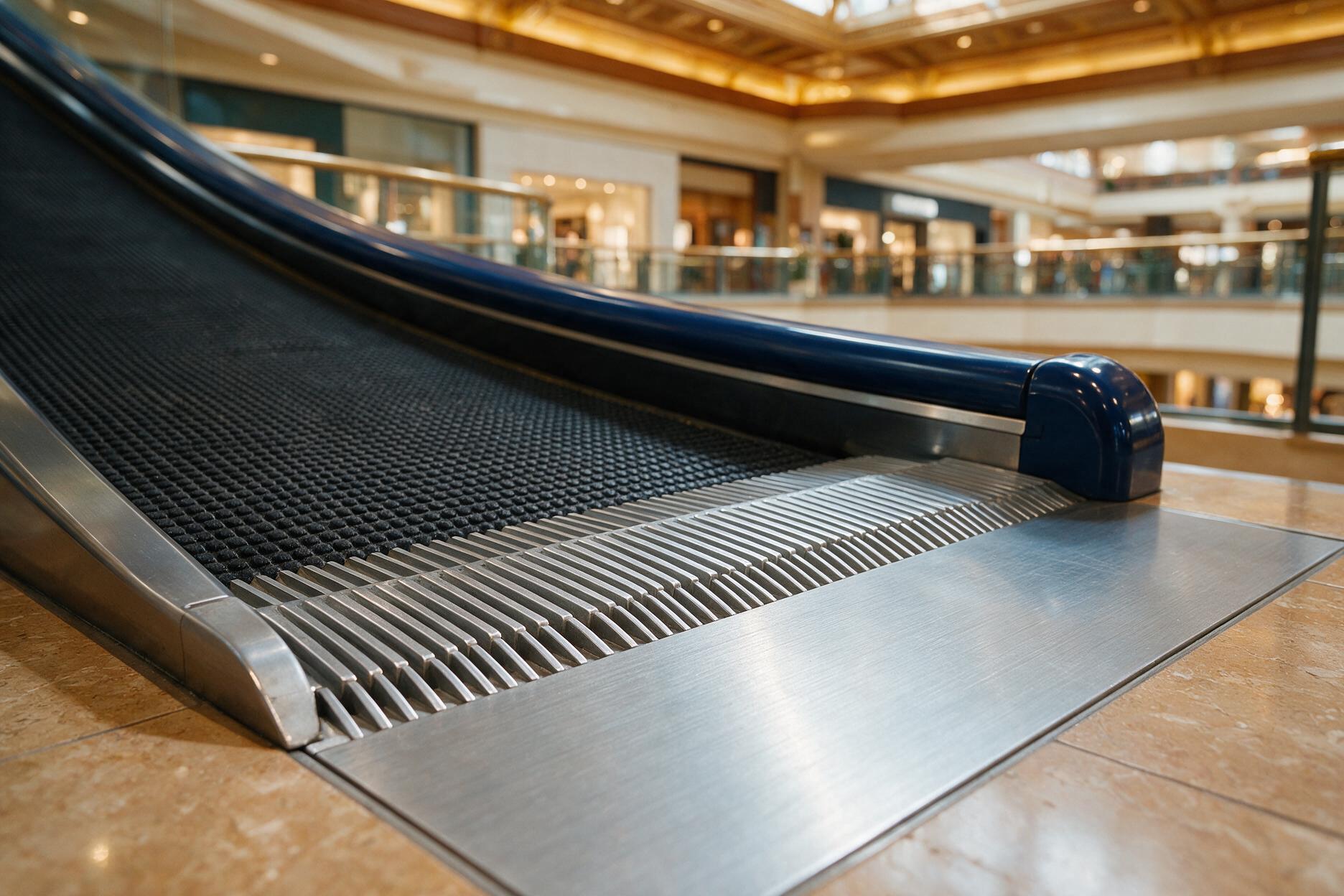
Elevators and escalators aren't left to a building owner's judgment about when maintenance is needed. Under Florida Statute §399.061, nearly all elevators and other covered conveyances must be inspected annually by a certified elevator inspector, and the division overseeing elevator safety has the authority to seal an elevator or order it out of service if an inspection reveals an unsafe condition. Florida's elevator safety chapter covers more than just traditional elevators — it also applies to escalators, dumbwaiters, moving walks, and inclined or vertical wheelchair lifts.
Separately, Florida Statute §399.125 requires elevator accidents to be reported to state regulators. That reporting requirement matters in a claim: it means there's often an official record of an incident independent of what the property owner tells you, and it's worth requesting directly rather than relying solely on the property's own account.
Who's Actually Responsible When Something Fails
- Elevator and escalator cases frequently involve more than one potentially liable party, because these are mechanical systems maintained under contract, not just features of a building:
- The property owner or management company, who is generally responsible for ensuring required inspections happen and known defects get addressed
- The maintenance contractor, if a company hired to service the equipment failed to catch or fix a defect during a routine inspection
- The elevator or escalator manufacturer, if a design flaw or manufacturing defect caused the failure rather than a maintenance lapse
- Deferred or skipped maintenance, where a required annual inspection was delayed or issues identified in a prior inspection were never corrected
- Sudden stops, drops, or misleveling, where the elevator car doesn't align properly with the floor, creating a fall hazard at the threshold
- Door malfunctions, including doors that close too quickly or fail to detect an obstruction
- Escalator entrapment, involving clothing, shoelaces, or loose items caught in the moving mechanism near the comb plate
- Sudden speed changes or reversals, which can throw riders off balance, particularly on crowded escalators
- Inspection and maintenance records, including the most recent certified inspection and any deficiencies noted but not yet corrected
- The service maintenance contract, which defines who was contractually responsible for upkeep
- Incident reports filed with state regulators, since Florida law requires elevator accidents to be reported
- Surveillance footage, which many commercial buildings maintain inside or near elevators and escalators
- The specific model and manufacturer information, in case the equipment is subject to a known recall or defect pattern
The installation company, in cases involving a newly installed or recently altered unit that wasn't installed to code
Sorting out which party actually caused the failure often requires the maintenance contract itself, since it typically specifies exactly who was responsible for what — and a property owner who outsourced maintenance isn't automatically off the hook if they failed to confirm the work was actually being done. DLE Lawyers' practice areas include this kind of premises-based negligence alongside more familiar claims like car and truck accidents.
Common Causes of Elevator and Escalator Injuries
Escalator injuries in particular tend to follow a recognizable pattern: falls account for the majority of escalator-related injuries, with entrapment involving clothing or footwear making up a smaller but often more severe category, according to data compiled from Consumer Product Safety Commission reporting.
Why Manufacturer Defects Are a Real Possibility
Not every elevator or escalator failure traces back to a maintenance lapse. The U.S. Consumer Product Safety Commission has issued large-scale recalls of residential and commercial elevator models over defects like hazardous door gaps that create entrapment risk, in some cases tied to serious injuries and deaths. When a failure stems from a design or manufacturing defect rather than poor upkeep, the case may involve a product liability claim against the manufacturer in addition to, or instead of, a premises liability claim against the property.
This distinction matters for your case strategy from the start, since it determines which parties and which insurance policies are actually relevant to your claim.
The Difference Between Public and Residential Elevator Cases
Not every elevator claim involves a hotel lobby or an office tower. Home elevators, increasingly common in multi-story residential properties and vacation rentals, come with their own regulatory wrinkle: while commercial elevators face routine annual inspection under Florida's elevator safety chapter, residential units installed inside a private home are sometimes exempt from the same inspection schedule. That gap has real consequences — several major manufacturers have recalled residential elevator models specifically because a hazardous gap between the landing door and the car door created an entrapment risk for young children, in some cases with fatal results.
If your case involves a home elevator rather than a commercial one, it's worth finding out early whether the specific model has been subject to a recall, since that changes both the theory of liability and which party — the property owner, the installer, or the manufacturer — is likely to bear responsibility.
Evidence That Determines These Cases
Much of this evidence sits with the building owner or maintenance company, not with you, which is why requesting it early — before routine business practices result in records being discarded — matters more in these cases than in many other premises liability claims.
What This Looks Like in Practice
Elevator and escalator claims share some legal DNA with other premises liability cases, including negligent security claims: a property owner's duty to maintain safe conditions doesn't disappear just because the hazard is mechanical rather than a wet floor or an unmonitored entrance. What's different is the paper trail. A slip-and-fall case often turns on eyewitness accounts and photos taken shortly after the incident; an elevator or escalator case often turns on documents that exist whether or not anyone thought to request them at the time — inspection certificates, maintenance logs, and manufacturer recall notices.
Frequently Asked Questions
How often are elevators required to be inspected in Florida?
Nearly all elevators and covered conveyances must be inspected annually by a certified elevator inspector under Florida Statute Chapter 399, with some limited exceptions for equipment under an active service maintenance contract.
Who is liable if a maintenance company missed a defect during inspection?
The maintenance contractor can be held liable if their inspection failed to identify or address a defect that a reasonably competent inspection should have caught.
Can I sue the manufacturer instead of the building owner?
Yes, if the failure was caused by a design or manufacturing defect rather than a maintenance issue, a product liability claim against the manufacturer may be more appropriate, and both types of claims can sometimes proceed together.
Does Florida require elevator accidents to be reported?
Yes. Florida Statute §399.125 requires elevator accidents to be reported to state regulators, creating an official record independent of the property's internal account.
What's the most common cause of escalator injuries?
Falls make up the majority of escalator-related injuries, with entrapment involving clothing, shoelaces, or loose items accounting for a smaller but often more serious share.
What should I do immediately after an elevator or escalator accident?
Get medical attention, photograph the equipment and immediate area if possible, note the specific elevator or escalator's location and any visible identification numbers, and report the incident to building management in writing.
The Bottom Line
Elevator and escalator failures don't happen in a vacuum — they happen within a system of required inspections, maintenance contracts, and manufacturer specifications that usually leaves a documented trail of who knew what and when. Finding that trail quickly is often what separates a strong claim from one built on guesswork. DLE Lawyers offers a free consultation to review what happened and which records still need to be requested.
Contact us for a free consultation.
Legal Disclaimer: This website is for informational purposes only and does not provide legal advice. Viewing this site or contacting JDLE Lawyers does not create an attorney-client relationship. Prior results and case outcomes do not guarantee a similar result.