

TL;DR
- Florida property owners have a legal duty to provide reasonable security against foreseeable crime, not just against physical hazards like wet floors.
- A negligent security claim holds the property owner responsible for a third party's crime, not the criminal act itself.
- The key legal question is foreseeability — whether the owner knew or should have known that a crime like this was likely to happen there.
- Prior similar incidents, poor lighting, broken locks, and missing security cameras are the evidence that typically proves a claim.
- These claims apply to apartment complexes, hotels, parking garages, shopping centers, and nightclubs, among other properties.
Most people think of premises liability as slip-and-fall cases — a spill on a grocery store floor, a broken step in a parking lot. But Florida law recognizes a separate and often more serious category: negligent security. If you were assaulted, robbed, or otherwise harmed by a criminal on someone else's property, the property owner may share legal responsibility, even though they didn't commit the crime themselves.
What Negligent Security Actually Means
Negligent security is a claim against the owner, lessor, operator, or manager of a property — not against the person who committed the crime. The theory is that the property didn't have to be a crime scene. If the owner had provided reasonable security measures, given what they knew or should have known about the risks, the crime likely wouldn't have happened, or wouldn't have been as severe.
This isn't a novel legal theory. Florida has codified it directly. Under Florida Statute §768.0701, in an action for damages against the owner, lessor, operator, or manager of commercial or real property brought by a person lawfully on the property who was injured by the criminal act of a third party, the jury must consider the fault of everyone who contributed to the injury — including the property owner, if their negligence made the crime possible.
Foreseeability: The Element That Decides Most Cases
Florida law doesn't make property owners insurers against every crime that could ever happen on their land. A truly random, unprecedented attack with no warning signs is difficult to pin on an owner. The entire case usually turns on one question: was this type of crime foreseeable?
Courts and insurers look at factors like:
- A history of similar crimes on the property or in the immediate area
- Complaints or police calls the owner received before the incident
- The nature of the property — a parking garage in a high-crime corridor carries a different expectation than a quiet suburban office park
- Whether existing security measures had already failed once before, without being fixed
If a property has had prior armed robberies in its parking lot and the owner still hasn't added lighting or cameras, that history becomes powerful evidence that the next incident was foreseeable and preventable.
What Counts as Inadequate Security
Negligent security claims typically involve one or more of the following failures:
- Broken or missing exterior lighting in parking lots, stairwells, or walkways
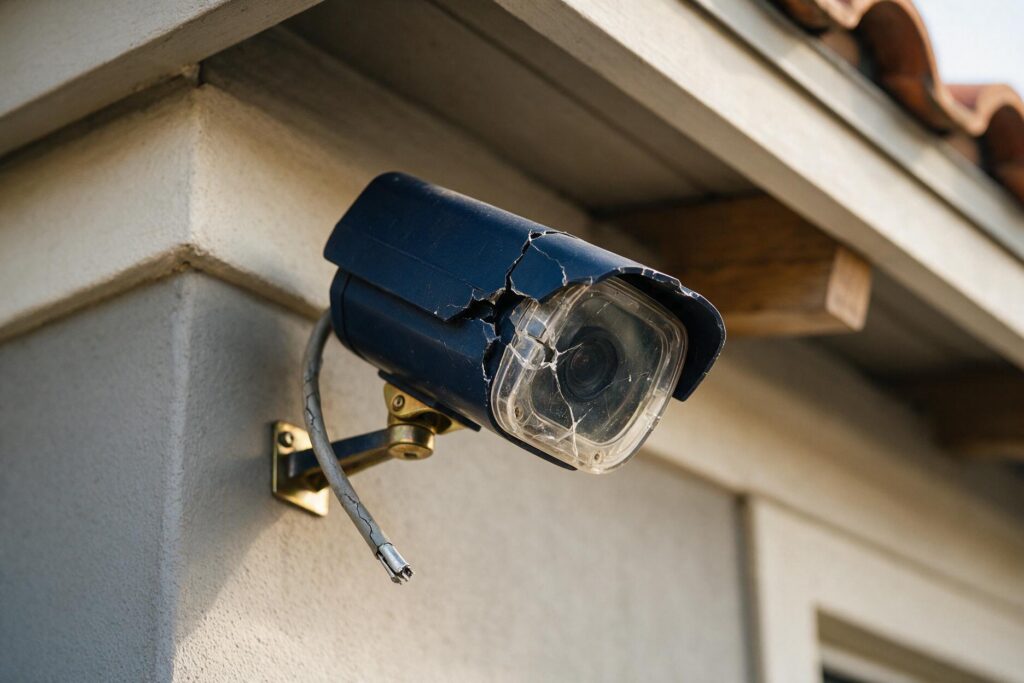
- Non-functioning security cameras, or cameras that were never actually monitored
- Broken locks, gates, or access control systems that should have restricted entry
- Insufficient security personnel for a property with a documented crime history
- Failure to screen employees or tenants in situations where screening was standard practice
Multifamily residential properties face an additional layer of scrutiny. Under Florida Statute §768.0706, apartment complexes and similar residential properties can actually gain a legal presumption against liability if they implement specific security measures — which means the flip side is also true: a complex that skipped those same measures has a much harder time defending itself after an attack.
Who Can Actually Be Held Liable
The property owner isn't always the only party with exposure in a negligent security case, and identifying every responsible party matters because it affects where the money to compensate you actually comes from. Depending on the facts, liability can extend to:
- The property management company, if they were contractually responsible for maintaining lighting, locks, or security staffing and failed to do so
- A third-party security contractor, if a hired guard service was negligent in how it screened, trained, or deployed its personnel
- A commercial tenant, in situations where a business leasing space in a larger complex had its own separate obligation to secure its portion of the property
- A homeowners' or condo association, for common areas like parking garages, pool areas, or shared walkways that fall under the association's maintenance responsibility rather than an individual unit owner's
Multiple defendants often means multiple insurance policies, which is part of why these cases benefit from being investigated broadly rather than assuming the property owner listed on the lease is the only party who could be responsible. A security contractor's liability policy, for example, may have limits and coverage terms that are completely separate from the property owner's general liability policy.
Where These Claims Typically Arise
Negligent security cases most often involve:
- Apartment complexes and gated communities, particularly around parking areas, mailrooms, and common areas
- Hotels and short-term rentals, especially involving room access and hallway security
- Shopping centers and retail parking lots, where foot traffic and low lighting combine
- Nightclubs, bars, and event venues, where alcohol service and crowd size raise the standard of care
- Parking garages, which the U.S. Department of Justice has specifically identified as a setting where inadequate security design contributes disproportionately to violent and property crime
If your injury happened in a premises liability setting that involved a criminal act rather than a physical hazard, the evidence you need to preserve is different from a typical slip-and-fall case, which is exactly why these claims benefit from being evaluated separately and early.
Evidence That Makes or Breaks These Cases
- Incident reports from prior crimes on the same property, often obtained through a public records request or discovery
- Maintenance logs showing whether broken lights or locks were reported and left unrepaired
- Security camera footage, both of the incident itself and of the system's general functionality beforehand
- Lease agreements or property management contracts that specify what security measures were promised to tenants or guests
- Expert analysis of the property's security design compared to industry standards, an approach the National Institute of Justice's research on crime prevention through environmental design has directly connected to premises liability litigation outcomes
Much of this evidence disappears or gets overwritten quickly — security footage in particular is often erased on a rolling cycle unless someone formally requests it be preserved.
Frequently Asked Questions
Can I sue a property owner if I was attacked by someone they don't employ?
Yes. Negligent security claims are specifically designed for situations where a third party — not an employee or agent of the property — committed the crime. The claim is about the owner's failure to provide reasonable security, not about vicarious responsibility for the criminal's actions.
Does the property owner have to have known about the exact crime that happened to me?
No. They need to have known, or reasonably should have known, that this type of crime was a foreseeable risk given the property's history and conditions — not the specific incident that occurred.
What if the property had some security measures, just not very good ones?
Partial or token security measures don't automatically satisfy the legal duty. The question is whether the measures were reasonable given the known risks, not whether something was technically in place.
How long do I have to file a negligent security claim in Florida?
Generally two years from the date of the incident, consistent with Florida's standard personal injury statute of limitations, though the specific facts of your case should be reviewed with an attorney.
Are apartment complexes held to a different standard than other commercial properties?
In some respects, yes. Florida law gives multifamily residential properties the ability to gain a presumption against liability by implementing specific statutory security measures, which also means the absence of those measures can work against the property in litigation.
What should I do immediately after being the victim of a crime on someone else's property?
Report the incident to police and get any needed medical care first. Then, if possible, note the presence or absence of lighting, cameras, and security personnel, and try to preserve any information about prior similar incidents you're aware of.
The Bottom Line
A criminal act doesn't erase a property owner's legal duty to keep their premises reasonably safe — it can be exactly what triggers it. If you were harmed by a crime that happened because a property owner cut corners on lighting, cameras, locks, or staffing, that failure is worth examining independently from the crime itself. DLE Lawyers offers a free consultation to review what happened and what evidence still needs to be preserved.