

TL;DR
- Most modern vehicles have an Event Data Recorder (EDR), commonly called a black box, that captures speed, braking, and other data in the seconds around a crash.
- Federal law makes that data the property of the vehicle's owner, and access by anyone else generally requires consent, a court order, or another specific legal basis.
- Florida courts have separately recognized that vehicle owners have a real privacy interest in this data, reinforcing why it isn't simply available for the asking.
- This data is often overwritten within a limited number of ignition cycles or a subsequent crash event, so preservation needs to happen quickly, before it's gone.
- A prompt written preservation request is the practical first step; formally obtaining another party's EDR data typically requires their cooperation or the discovery process once a claim or lawsuit is underway.
A car's black box records a short, precise window of exactly what the vehicle was doing right before a crash — speed, braking, steering input, seatbelt status. That data can be some of the most objective evidence in a disputed accident claim, and it's also some of the most fragile, since many systems only retain it for a limited window before it's overwritten. Understanding who actually controls this data, and how quickly it needs to be preserved, matters more than most people realize until it's already gone.
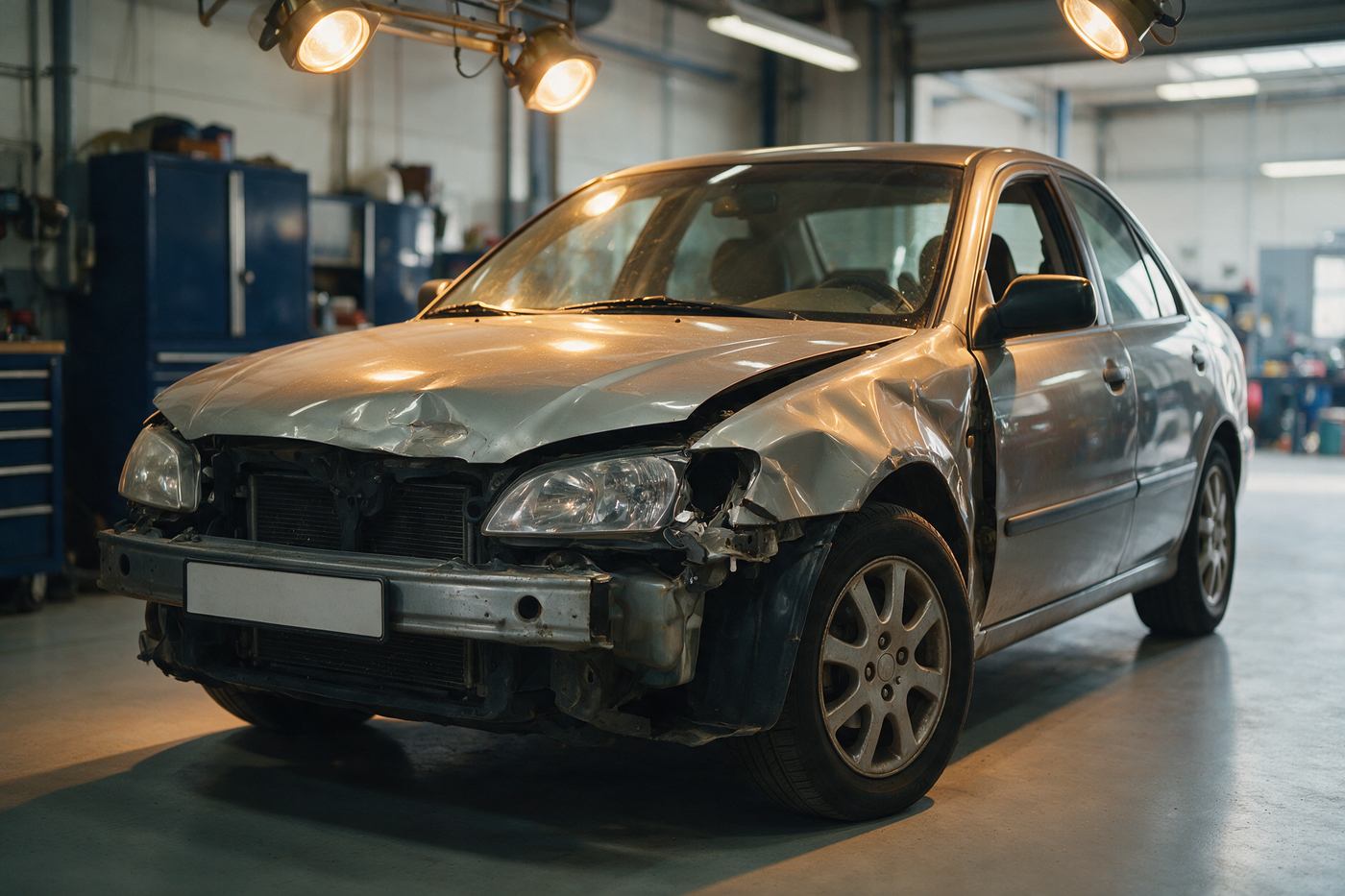
An Event Data Recorder is a device built into most vehicles manufactured in the last two decades, designed to record a short window of data — typically a matter of seconds — before, during, and after a crash-like event. Depending on the vehicle, this can include speed, brake application, throttle position, steering angle, seatbelt use, and airbag deployment timing. It isn't a continuous recording system; it's triggered by specific conditions, similar in concept to an aircraft's flight data recorder, just on a much smaller scale. NHTSA's own EDR research program has studied and regulated these devices since the early 2000s, establishing the technical standards manufacturers follow for what gets recorded and how.
Because this data reflects exactly what the vehicle's own systems measured in real time, it can be more objective than witness recollection or even a police officer's post-crash assessment, which is part of why it's become an increasingly important piece of evidence in serious accident claims.
Who Actually Owns This Data
This is where a lot of confusion comes in, since many people assume EDR data is automatically available to insurers, opposing attorneys, or anyone investigating a crash. It isn't. Under the federal Driver Privacy Act of 2015, codified at 49 U.S.C. §24302, EDR data belongs to the owner or lessee of the vehicle in which it's installed, regardless of when the vehicle was manufactured. Access by anyone else generally requires one of several specific conditions: a court or other judicial authority authorizing retrieval, consent from the vehicle's owner or lessee, or a narrower set of purposes like traffic safety research or emergency medical response determination.
In practical terms, this means the other driver's insurance company doesn't have an automatic right to pull data from your vehicle, and you don't have an automatic right to pull it from theirs. Access runs through consent or a formal legal process, not a simple request.
Florida Courts Have Reinforced This Privacy Interest
Florida's own courts have weighed in on how seriously this data is protected, in a case that's become a key reference point even though it arose in a criminal context. In State v. Worsham, 227 So. 3d 602 (Fla. 4th DCA 2017), a Florida appellate court held that a vehicle owner has a reasonable expectation of privacy in the data stored on an EDR, and that law enforcement generally needs a warrant to access it from an impounded vehicle without the owner's consent. While that case involved a criminal investigation rather than a civil accident claim, the underlying principle — that this data isn't simply exposed for anyone to access — reflects the same reasoning that applies in the civil context: access to someone else's vehicle's black box isn't something you can arrange unilaterally.
Given this legal backdrop, the practical reality in a civil car accident case is that formally obtaining data from a vehicle you don't own typically requires either the other party's voluntary cooperation or the discovery process once a claim or lawsuit has been filed, rather than a simple request made outside that process. An attorney can advise on the specific mechanics that apply to your situation, since the right approach can depend on whether litigation has already begun.
Why Speed Matters More Than Almost Any Other Evidence
EDR data isn't permanent. Depending on the vehicle and its systems, data from a crash event can be overwritten after a set number of subsequent ignition cycles, or if the vehicle is involved in another triggering event before the data is downloaded. A vehicle that gets driven, repaired, or sold before anyone thinks to request the data may have already lost it entirely.
This is why a written preservation request — often called a spoliation letter — matters so much, and why it needs to go out early rather than waiting until a claim is further along. A preservation letter puts the other party, their insurer, or a repair facility on formal notice not to alter, repair, or dispose of the vehicle in a way that would destroy the data, which matters both practically and legally if the data is lost after the request was made.
What to Do to Protect This Evidence
- Send a written preservation request as early as possible, ideally within days of the crash, addressed to the vehicle owner, their insurer, and any facility that might repair or dispose of the vehicle
- Identify which vehicles were involved and their approximate age, since EDR presence and data retention vary by manufacturer and model year
- Avoid having your own vehicle repaired or the airbags reset before the data is downloaded, if there's any possibility the data is relevant to a disputed claim
- Request your own vehicle's data be downloaded and preserved, since you control that access and don't need anyone else's permission
- Understand that a formal request for the other party's data may need to go through the legal process, not just a phone call or email, particularly once a claim is being actively disputed
Why This Evidence Often Decides Disputed Claims
Black box data can directly resolve questions that would otherwise come down to competing accounts: whether a driver was speeding, whether brakes were applied and when, whether a sudden stop was as abrupt as claimed. In a case like a rear-end collision, where fault often hinges on exactly this kind of split-second timing, EDR data can be the difference between a disputed claim and a clear one. The same is true in a staged accident scenario, where the mechanics of how a crash actually happened often don't match the story being told.
Frequently Asked Questions
Can I access the other driver's black box data myself?
Not directly. Under federal law, that data belongs to the vehicle's owner, and access by someone else generally requires consent, a court order, or another specific legal basis, not a simple request.
How quickly does black box data disappear?
It varies by vehicle, but data can be overwritten after a limited number of subsequent ignition cycles or another triggering event, which is why preserving it needs to happen quickly.
What is a spoliation letter, and why does it matter here?
It's a written request putting another party on formal notice not to alter, repair, or dispose of evidence — including a vehicle's EDR data — that may be relevant to a legal claim.
Do Florida courts recognize a right to privacy in this kind of data?
Yes, in the context addressed by State v. Worsham, a Florida appellate court recognized a reasonable expectation of privacy in EDR data, reinforcing why access isn't automatic even in a civil dispute.
Can I get my own vehicle's black box data downloaded?
Yes, since you're the owner, you generally control access to your own vehicle's data without needing anyone else's consent.
What if the vehicle involved in my accident has already been repaired?
The data may still be intact depending on the vehicle and what work was done, but the window to preserve it narrows quickly, so it's worth investigating as soon as possible rather than assuming it's already lost.
The Bottom Line
Black box data can be some of the most objective evidence available after a Florida car accident, but it doesn't wait for you to get around to requesting it — a vehicle's next few ignition cycles could overwrite exactly what your claim needs. Acting quickly to preserve this evidence, and understanding that access runs through consent or a formal process rather than a simple request, can make the difference in a disputed claim. DLE Lawyers offers a free consultation to review what happened and what evidence still needs to be preserved.