
TL;DR
- Rain is the weather condition most closely tied to crashes: the Federal Highway Administration reports that 75% of weather-related crashes happen on wet pavement and 47% during rainfall.
- Florida law requires drivers to slow down for weather conditions and to use headlights during any rain, and a violation of either rule can become evidence of fault.
- "I hydroplaned" is not an automatic defense. Insurers often treat it as a speed-for-conditions problem, though the facts of each crash decide the outcome.
- Fault in a rain crash can be shared, and other parties, from a driver who braked suddenly to a government entity responsible for drainage, can sometimes be part of the picture.
- Evidence tied to the rain, like standing water, weather records, and vehicle data, can disappear quickly, so it needs to be captured fast.
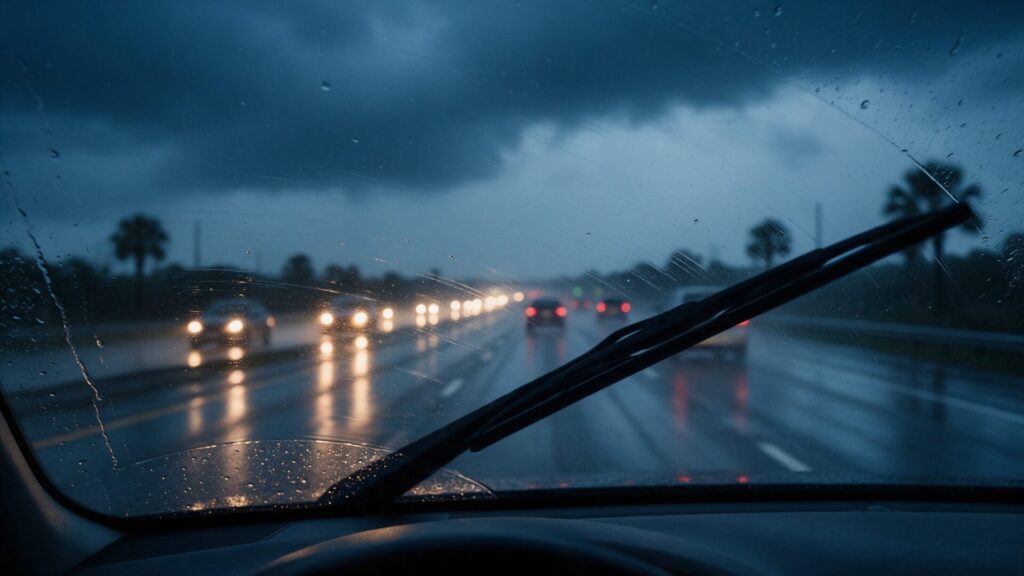
South Florida drivers know how fast a sunny afternoon becomes a downpour. Within minutes, visibility drops, roads fill with standing water, and a normal commute turns into a high-risk drive. When a crash happens in those conditions, it's tempting to assume nobody is at fault because the rain caused it. That assumption is rarely how insurers, or the law, see it.
What the Numbers Say About Rain and Crashes
According to the Federal Highway Administration's Road Weather Management Program, each year 75 percent of weather-related vehicle crashes occur on wet pavement and 47 percent happen during rainfall. FHWA estimates that nearly 5,700 people are killed and more than 544,700 are injured in crashes on wet pavement annually, and that over 3,400 people are killed and over 357,300 are injured in crashes during rainfall. The agency also notes that rain reduces traction and maneuverability and that heavy rain cuts visibility.
Those figures matter in a claim for a practical reason: rain-related crashes are common and foreseeable. A driver who is on the road in a downpour is expected to know that conditions are harder than usual and to drive accordingly.
What Hydroplaning Is, and Why It Isn't an Automatic Excuse
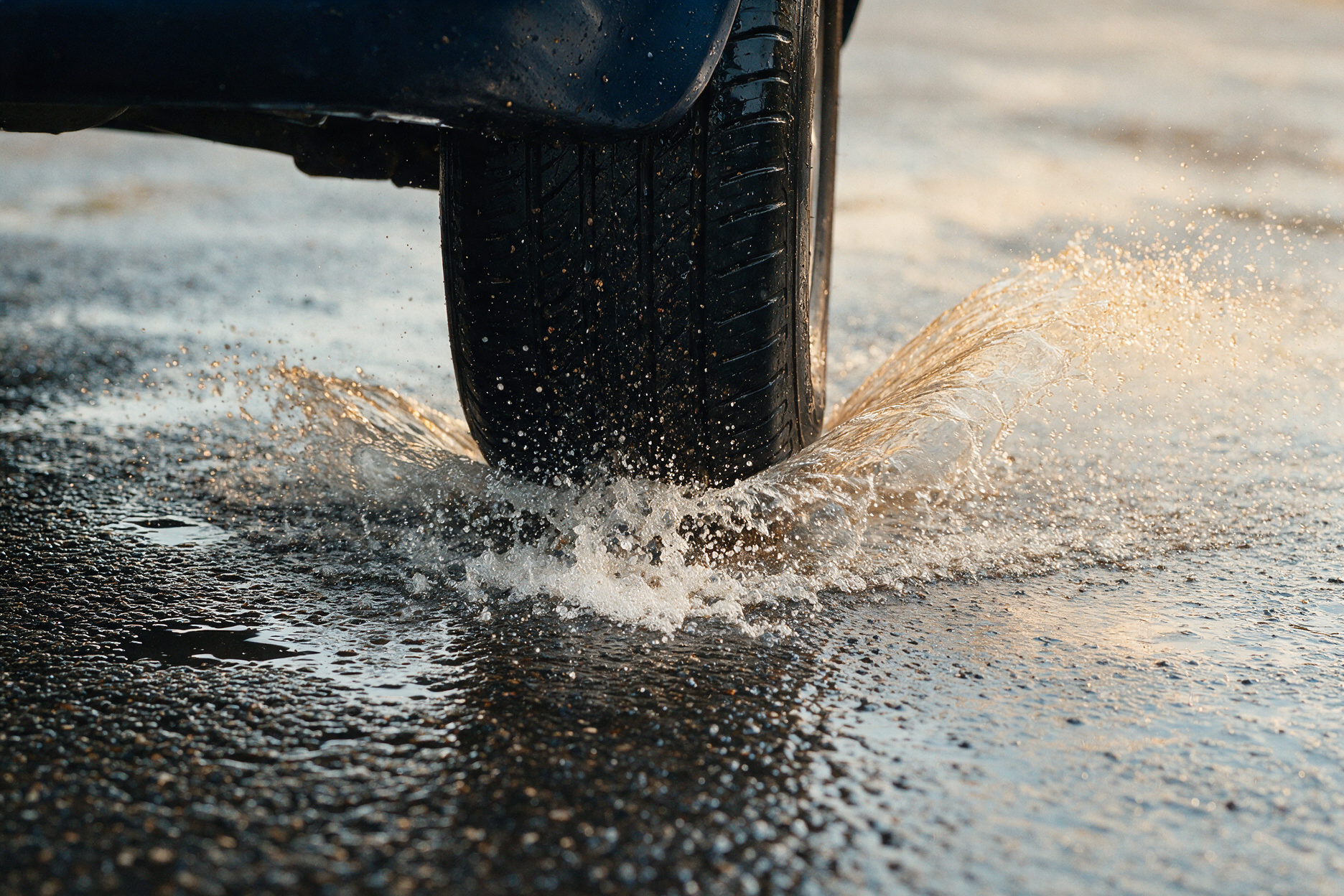
Hydroplaning happens when a layer of water builds up between a vehicle's tires and the road surface, so the tires ride on water instead of gripping the pavement. The driver can lose steering and braking control with little warning. Three things tend to drive it: how fast the vehicle is going, the condition of the tires, and how much water is on the road.
Drivers sometimes describe a hydroplaning crash as unavoidable, and insurers sometimes accept that framing when it suits them. But two of those three factors, speed and tire condition, are within the driver's control. That's why a hydroplaning crash is often analyzed as a question of whether the driver was going too fast for the conditions, not as a pure accident of nature.
What Florida Law Requires in the Rain
Two traffic statutes do most of the work in a rain crash.
First, Florida Statute §316.183 prohibits driving at a speed greater than is reasonable and prudent under the conditions and with regard to the actual and potential hazards then existing. It adds that speed must be controlled as necessary to avoid colliding with any person, vehicle, or object, and it specifically requires drivers to drive at an appropriately reduced speed when any special hazard exists by reason of weather or highway conditions. A posted speed limit is a ceiling in good conditions, not a safe speed in a downpour.
Second, Florida Statute §316.217 requires vehicles to display lighted lamps during any rain, smoke, or fog. You'll often hear this described as "wipers on, lights on," which is useful shorthand, but the statute itself says headlights are required during any rain. A violation of either statute is a noncriminal traffic infraction.
A traffic citation does not by itself establish civil fault. Evidence of the underlying driving conduct may support a negligence claim, but Florida Statute §316.650(9) generally makes the citation itself inadmissible at trial, subject to narrow statutory exceptions.
How Fault Gets Argued in a Rain Crash
Expect the other side to raise some version of "it was the rain." The response is usually built from specific facts:
- How fast was the driver going relative to conditions? Speed that might be fine in dry weather can be unreasonable on wet pavement with limited visibility.
- Were headlights on? Under §316.217, they're required during any rain, and a driver without them was harder to see.
- Was there enough following distance? Wet roads lengthen stopping distances, which is why rain and rear-end collision liability often go together.
- What did the driver do once the car started to slide? Sudden braking or sharp steering can turn a minor skid into a crash.
Florida's modified comparative negligence rule can divide fault. For negligence actions covered by Florida Statute §768.81, a claimant found more than 50% at fault for their own harm cannot recover damages. At 50% or less, damages are reduced in proportion to the claimant's fault.
When Someone Other Than a Driver May Be Involved
Not every rain crash comes down to two drivers. Depending on the facts, other parties can be part of the picture:
- A driver who braked suddenly or changed lanes without room, creating a hazard another driver couldn't avoid on wet pavement
- A government entity responsible for road drainage or maintenance, where chronic ponding or a defective drain contributed, though claims against public entities follow strict notice rules like those covered in our guide to sovereign immunity in playground injury claims
- A tire or vehicle defect or a maintenance failure, where the vehicle's equipment played a role in the loss of control
These possibilities depend heavily on the evidence, and they shouldn't be assumed. They're the kind of detail that needs to be investigated early, because water, tire marks, and vehicle conditions don't stay unchanged for long.
Flooded Roads Are a Separate Danger
Standing water doesn't just cause skids. According to the CDC's NIOSH guidance on hurricane and flood response, 12 inches of moving water can carry off a small car, and 18 to 24 inches of moving water can carry away larger vehicles. The guidance advises turning around when you come to a flooded road or bridge. A driver who chooses to enter water of unknown depth may face questions about their own judgment if something goes wrong.
What If You Were the Only Driver Involved?
If you hydroplaned and hit a guardrail or a barrier with no other vehicle involved, there may be no one to hold responsible. Florida's no-fault system means your own Personal Injury Protection coverage typically pays a portion of your medical bills regardless of fault, though that coverage has limits and its own dispute process, discussed in our post on PIP benefits denied after an independent medical exam.
Evidence That Rain Can Erase
- Photos and video of the road, including standing water, drainage, and lane markings, taken as soon as it's safe, since water recedes quickly
- Weather records showing rainfall at the time and place of the crash
- Dashcam footage from your vehicle or others nearby
- Vehicle data, like the black box information that can show speed and braking before impact
- The police report and any citations, including notes on road and weather conditions
- Tire condition and maintenance records for the vehicles involved
- Witness contact information, since drivers who saw the slide or the spin are often gone within minutes
Local conditions matter too. As we've noted in our look at why car accidents are so common in Miami Lakes, heavy rain and flooding during hurricane season are a recurring contributor to slippery roads and hydroplaning in South Florida.
What to Do After a Rain-Related Crash
- Check for injuries and call 911, and move to a safe spot if your vehicle can be driven
- Photograph the scene before the water drains or traffic clears it
- Don't discuss fault at the scene, and avoid guessing about speed or what happened
- Get medical attention, even if injuries seem minor at first
- Keep your vehicle as it is if possible, since data and tire evidence can matter
Frequently Asked Questions
Is hydroplaning always considered an accident nobody caused?
No. Hydroplaning is often tied to speed and tire condition, both of which a driver controls, so insurers and courts frequently look at whether the driver was going too fast for the conditions.
Do Florida drivers have to turn on headlights when it rains?
Yes. Florida Statute §316.217 requires headlights during any rain, smoke, or fog. The "wipers on, lights on" rule is a common shorthand for that requirement.
Can a speed limit be too fast in the rain?
Yes. Florida law prohibits driving at a speed greater than is reasonable and prudent for the conditions, and it requires an appropriately reduced speed when weather creates a special hazard, even if you're under the posted limit.
Can I recover compensation if I was partly at fault in a rain crash?
Potentially. For negligence actions covered by Florida Statute §768.81, a claimant found more than 50% at fault for their own harm cannot recover damages. At 50% or less, damages are reduced in proportion to the claimant's fault.
What if I hydroplaned and no other car was involved?
There may be no one to claim against, but your own PIP coverage generally helps with medical bills regardless of fault, subject to its limits and rules.
Could a road's drainage problems be part of my claim?
In some cases, yes, but claims against government entities involve strict notice requirements and should be reviewed by an attorney early.
The Bottom Line
Rain makes crashes more likely, but it doesn't erase the duty to drive carefully. Speed, headlights, following distance, and the evidence collected in the first hours often decide whether the rain gets blamed or the driver does. If you were hurt in a crash during wet weather, DLE Lawyers offers a free consultation to review what happened and what evidence still needs to be preserved.