

TL;DR
- Wrong-way crashes are rare compared to other collision types, but they're disproportionately deadly — Florida data shows a fatality is roughly three times more likely in a wrong-way freeway crash than a typical freeway crash.
- Alcohol impairment is the single largest contributing factor nationally, present in roughly six out of ten wrong-way crashes.
- Florida is actively deploying wrong-way detection technology on high-risk off-ramps, including extensively in Miami-Dade County, and the systems have shown a strong track record at preventing incidents before they become crashes.
- Head-on collisions from wrong-way driving tend to produce catastrophic injuries specifically because both vehicles are typically traveling at highway speed toward each other.
- Liability almost always rests with the wrong-way driver, but identifying every contributing factor — impairment, a missing or obscured sign, a confusing ramp design — can affect who else may share responsibility.
A wrong-way crash is one of the few collision types where fault is rarely the hard question — it's almost always the driver going against traffic. What makes these cases different is everything else: the severity of the injuries, the layers of contributing factors worth investigating, and a rapidly evolving set of state safety initiatives that are actively reshaping how these crashes happen and how they're prevented.
Why Wrong-Way Crashes Are So Disproportionately Severe
Wrong-way collisions are uncommon compared to rear-end crashes, intersection crashes, or lane-change incidents, but their severity sets them apart. According to FDOT's Wrong-Way Driving Program, six out of ten arterial wrong-way crashes and seven out of ten freeway wrong-way crashes in Florida result in at least one person being harmed, and a fatality is roughly three times more likely to occur in a freeway wrong-way crash than in an arterial one.
The mechanics explain why. A wrong-way crash on a divided highway is typically a head-on collision between two vehicles both traveling at highway speed, which multiplies the combined force of impact far beyond what occurs in a same-direction rear-end or side-impact crash. There's also often little to no warning — a driver going the correct direction has seconds, at most, to react to a vehicle approaching from the wrong direction in what should be an empty lane ahead.
What Florida's Law Actually Says
Under Florida Statute §316.090, whenever a highway is divided into two or more roadways by a physical barrier or median, every vehicle must be driven only upon the right-hand roadway, and crossing that dividing section is prohibited except at an authorized opening or intersection. A related provision, §316.088, separately addresses driving in the wrong direction on a one-way roadway. Both are foundational traffic laws, and a violation establishes clear negligence in a civil injury claim, distinct from — though often accompanying — a criminal charge like DUI if impairment was involved.
Why These Crashes Happen
According to the NTSB's Wrong-Way Driving Special Investigation Report, alcohol impairment stands out as the leading contributing factor in wrong-way crashes on high-speed divided highways nationally, with older driver confusion and, in some cases, drug involvement as additional factors. The report also found that these crashes are especially likely to occur in the fastest, left-most travel lane, and disproportionately at night, when visibility is already reduced and a driver going the wrong direction is far harder to spot in time to react.
This pattern matters for a claim because it shapes what evidence is worth pursuing early — a toxicology report, the timing and location of the crash, and whether the wrong-way driver entered through a specific ramp or interchange with a documented history of similar incidents.
Florida's Active Effort to Prevent These Crashes
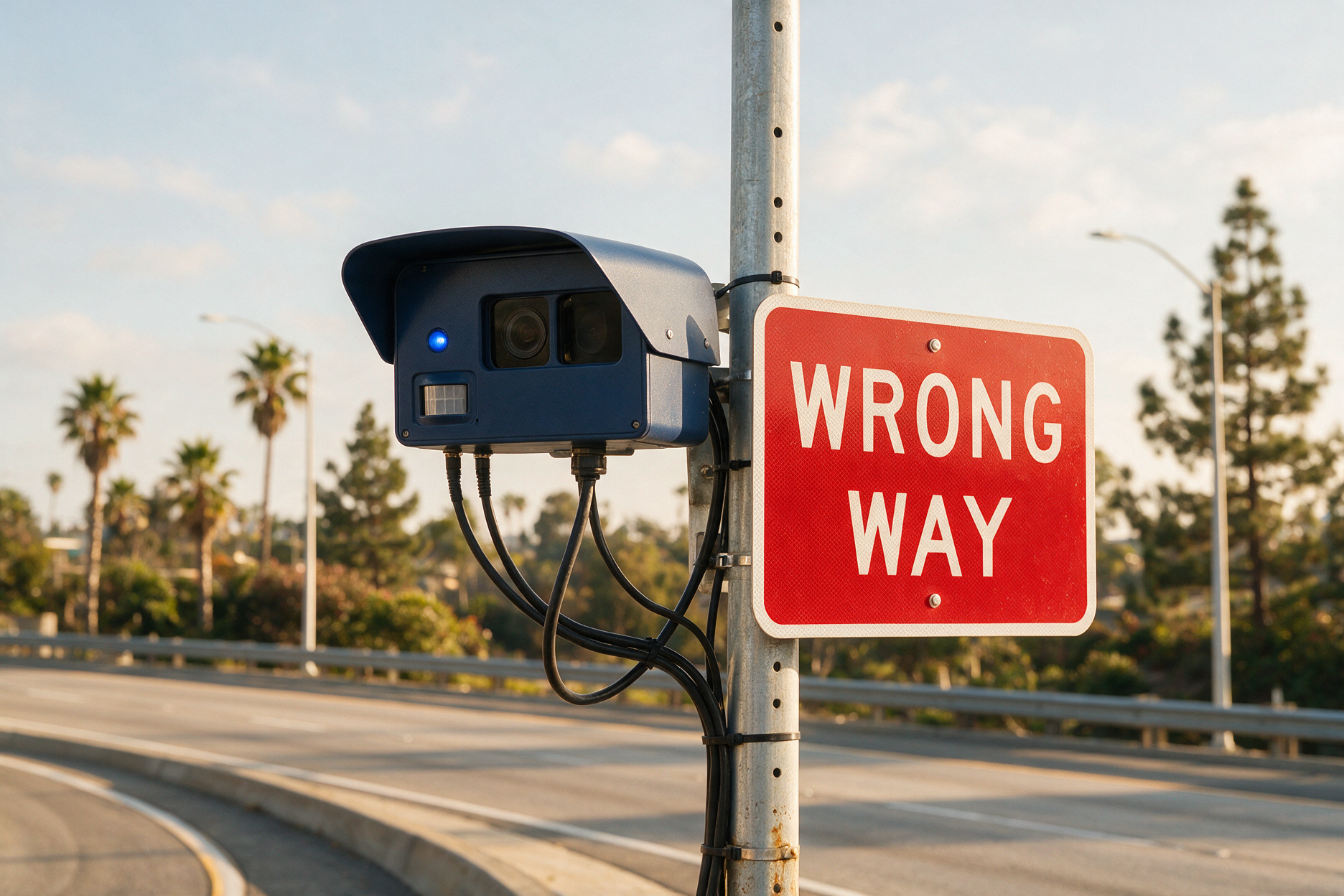
Florida has invested heavily in wrong-way detection technology in recent years, and the state's approach is directly relevant to Miami-Dade drivers. FDOT identified roughly 95 exit ramps across Miami-Dade County alone as posing elevated wrong-way risk, and has been retrofitting them in phases with detection systems that use radar, cameras, and sensors to identify a vehicle entering a ramp against the flow of traffic. When triggered, the system activates flashing warning signs for the wrong-way driver, and simultaneously alerts FDOT's traffic management center and law enforcement. Reported figures show roughly 80% of detected wrong-way drivers turn around in response to these warnings before ever reaching the main roadway.
This matters for a claim in a subtle but real way: if a crash occurred at a location where detection technology either wasn't yet installed, malfunctioned, or the driver bypassed an obvious warning, that context can become relevant to understanding how the crash actually unfolded, even though it doesn't shift fault away from the wrong-way driver themselves.
Who Can Be Held Liable
- The wrong-way driver bears primary liability in the overwhelming majority of these cases, and evidence of impairment, prior citations, or reckless conduct strengthens that claim significantly
- A bar, restaurant, or other establishment may face separate liability under Florida Statute §768.125 if it willfully and unlawfully sells or furnishes alcohol to a person under lawful drinking age, or knowingly serves a person habitually addicted to alcohol, and injury results from that person's intoxication. Serving a visibly intoxicated adult alone does not establish liability under this statute.
- A government entity could potentially share responsibility in rare cases involving a missing, obscured, or malfunctioning wrong-way sign at a location with a documented history of similar incidents, though this type of claim involves sovereign immunity considerations that significantly change the legal process
Evidence That Matters in These Cases
- The police report and any toxicology results, which typically document impairment status if alcohol or drugs were a factor
- Traffic camera or dashcam footage, particularly from nearby vehicles, which can capture the moments leading up to the crash
- Records of prior wrong-way incidents at the same ramp or interchange, which can be relevant to a broader liability picture
- Vehicle data, similar to the black box evidence relevant in other serious crashes, which can help establish speed and braking in the moments before impact
What to Do If You Spot a Wrong-Way Driver
FDOT's own guidance for drivers who encounter a wrong-way vehicle is worth knowing, since the seconds immediately after noticing one matter enormously. Stay as far to the right as safely possible, slow down, and avoid swerving sharply, since an abrupt lane change can create a secondary collision risk with other traffic. If you can safely do so, call 911 to report the location and direction of travel, since that report can trigger a faster law enforcement and detection-system response for other drivers still approaching the same stretch of road.
This guidance matters for a claim too, in an indirect way. If a wrong-way crash you were involved in was preceded by other drivers' 911 calls, or nearby dashcam footage capturing the vehicle before it reached you, that timeline can help establish exactly how long the hazard existed and whether any intervention — a detection system alert, a law enforcement response — had a realistic chance to prevent the collision before it happened.
Frequently Asked Questions
Is the wrong-way driver always at fault?
In the overwhelming majority of cases, yes. Driving against the flow of traffic is a clear statutory violation and generally establishes negligence, though other parties can occasionally share responsibility depending on the specific facts.
What causes most wrong-way crashes?
Alcohol impairment is the leading factor nationally, present in a majority of these crashes, followed by driver confusion, particularly among older drivers, and reduced nighttime visibility.
Does Florida have technology to prevent wrong-way crashes?
Yes. FDOT has deployed detection systems at high-risk ramps statewide, including extensively in Miami-Dade County, using radar and cameras to detect and warn wrong-way drivers before they reach the main roadway.
Can I sue a bar or restaurant if the wrong-way driver was served alcohol there?
Potentially, under Florida's dram shop framework, but this type of claim has specific legal requirements that should be reviewed with an attorney based on the facts of the case.
What if the crash happened at a ramp without detection technology installed?
That context may be relevant to understanding the full picture of how the crash happened, though it generally doesn't shift primary fault away from the wrong-way driver.
What evidence is most important after a wrong-way crash?
The police report, any toxicology results, nearby camera footage, and vehicle data from the crash are typically the most significant pieces of evidence in these cases.
The Bottom Line
Wrong-way crashes tend to leave little ambiguity about who caused the collision, but that clarity on fault doesn't make the aftermath simple — these are often catastrophic injury cases with layers of contributing evidence worth investigating thoroughly. If you or a loved one were hurt in a wrong-way crash in Florida, DLE Lawyers offers a free consultation to review what happened and what evidence needs to be preserved.