
TL;DR
Florida law does not require riders over 21 to wear a helmet — but choosing not to wear one can legally reduce the compensation you recover after a crash.
Under Florida's modified comparative negligence law, if an insurer or defense attorney argues your head injuries were worsened by helmet non-use, your damages can be reduced proportionally.
Helmet use is directly relevant to brain injury, skull fracture, and facial trauma claims — the most expensive and life-altering injuries in motorcycle crashes.
The absence of a helmet does not eliminate your right to sue or recover — it changes how much you may recover, and only for injuries that a helmet would have prevented.
Miami Lakes sits along high-risk motorcycle corridors including the Palmetto Expressway and NW 67th Avenue, where serious crashes occur regularly.
Free consultations available 24/7 — no upfront fees.
Florida has some of the most permissive motorcycle helmet laws in the country. Riders over 21 who carry at least $10,000 in medical benefits insurance can legally ride without a helmet under Florida Statute § 316.211. That legal freedom is real — but it comes with legal consequences that most riders do not fully understand until after a crash.
The question is not whether you had the right to ride without a helmet. You did. The question is what happens to your injury claim when the insurance company finds out you weren't wearing one.
In Miami Lakes, where motorcycle traffic is common along the Palmetto Expressway, NW 67th Avenue, and the surface roads cutting through Hialeah and the surrounding communities, this issue comes up in serious crash cases with regularity. Understanding how helmet use affects your legal claim — and how an experienced attorney fights back against the insurer's argument — is essential knowledge for any rider in South Florida.
This guide explains exactly where Florida law stands, how helmet evidence gets used against injured motorcyclists, and what it takes to protect the maximum compensation available for your injuries.
Florida's Motorcycle Helmet Law: What It Actually Says
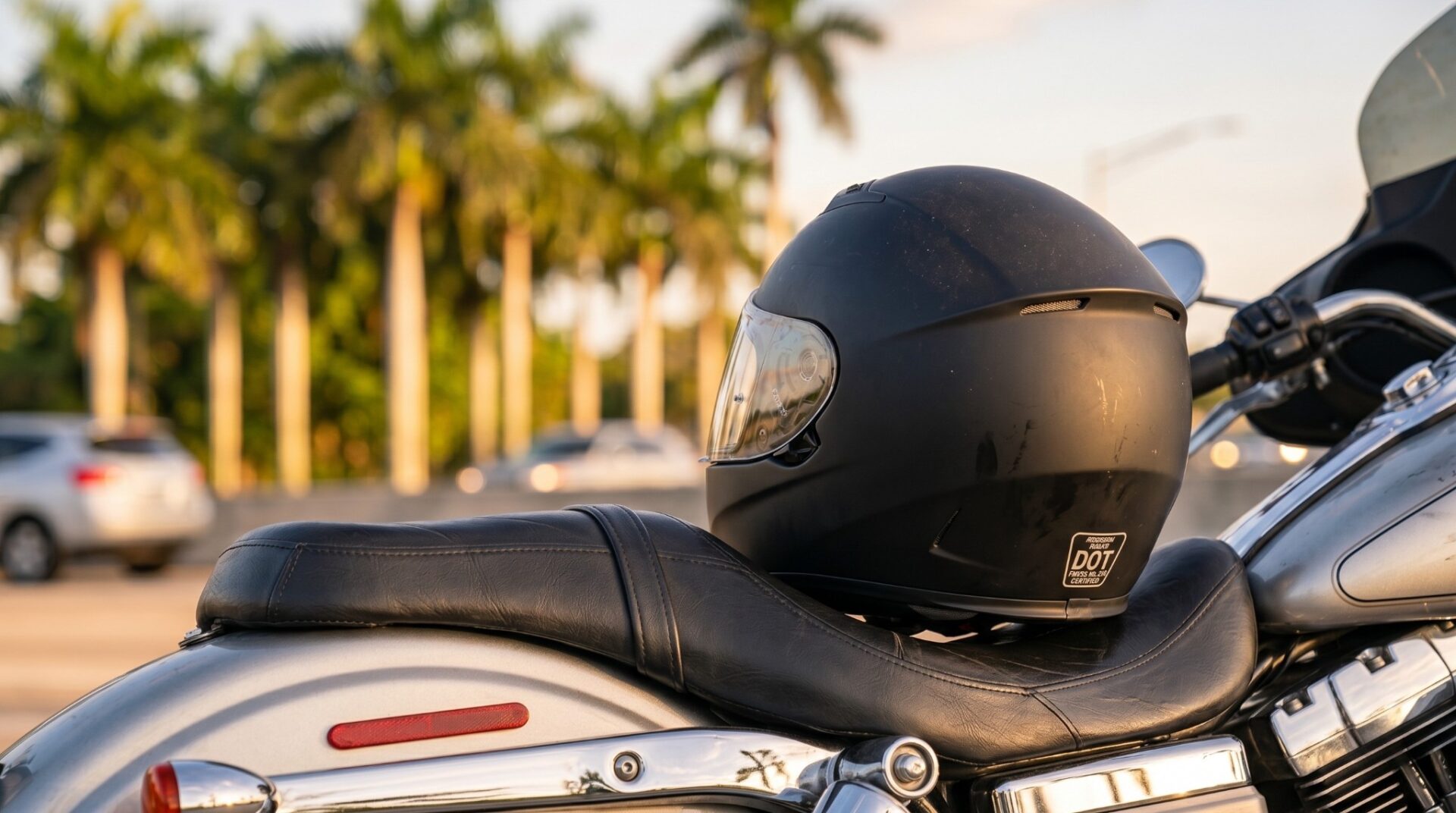
Florida is one of only a small number of states with a partial helmet law. Under Florida Statute § 316.211, wearing a motorcycle helmet is required for riders under 21 — but riders 21 and older are exempt from the requirement if they carry medical benefits coverage of at least $10,000.
This means that for the majority of adult riders in Miami Lakes, riding without a helmet is entirely legal.
The law does not, however, protect riders from the legal consequences of that choice in a civil lawsuit. Florida's partial helmet law creates a legal permission to ride without a helmet. It does not immunize a rider from having that choice introduced as evidence in a personal injury claim.
That distinction — between legal permission and legal protection — is the source of significant confusion among injured motorcyclists, and it is the opening that insurance adjusters use to reduce settlement offers.
Comparative Negligence and the Helmet Defense
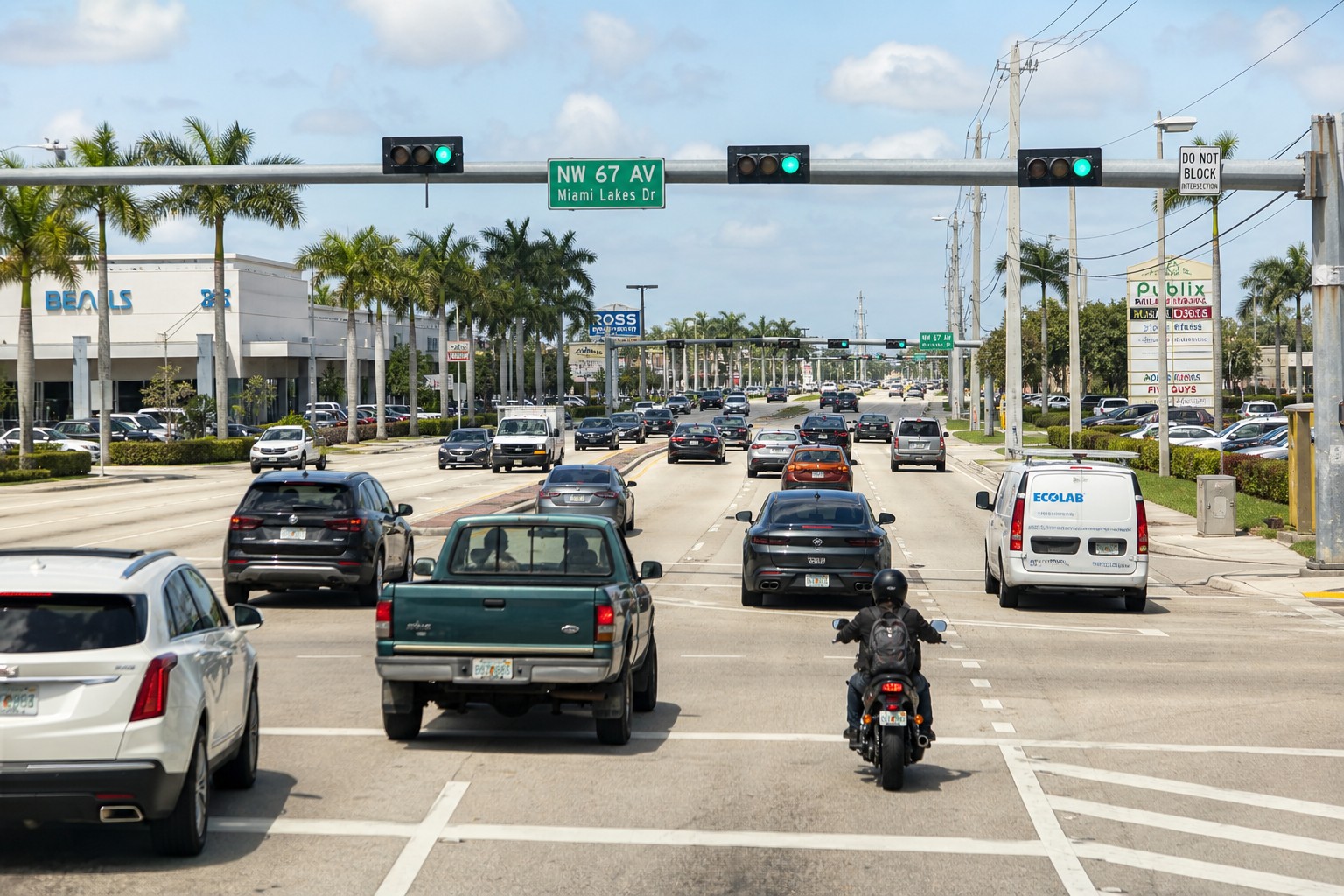
Florida operates under a modified comparative negligence system (Fla. Stat. § 768.81). Under this framework, fault and damages can be allocated across multiple parties based on each party's percentage of responsibility.
When an injured motorcyclist was not wearing a helmet, insurance defense attorneys frequently raise what is known informally as the "helmet defense." The argument works like this:
The at-fault driver caused the crash. That is not disputed. But the defense argues that the severity of certain injuries — particularly head injuries, brain injuries, skull fractures, and facial trauma — was increased by the rider's decision not to wear a helmet. Because the rider contributed to the extent of their own injuries, the defense argues the rider bears a percentage of fault for those injuries.
Under comparative negligence, if a jury finds that a rider's head injuries were 30% attributable to non-helmet use, the rider's recovery for those specific injuries is reduced by 30%. This same proportional fault system also applies in other crash types — our guide on rear-end collision fault in Miami Lakes explains how it works in practice.
This does not affect injuries that are unrelated to helmet use — broken bones, road rash, spinal injuries, internal organ damage, and other trauma that a helmet would not have prevented are not impacted by this argument. But for traumatic brain injuries, skull fractures, and facial injuries — which are often the most costly and life-altering outcomes of a serious motorcycle crash — the financial impact of the helmet defense can be significant.
What the Research Says About Helmets and Injury Severity
Defense attorneys do not raise the helmet defense in a vacuum. They raise it because there is a body of scientific and medical literature that specifically addresses the relationship between helmet use and head injury severity.
The National Highway Traffic Safety Administration (NHTSA) has documented extensively that helmets reduce the risk of fatal head injuries in motorcycle crashes. Studies in peer-reviewed medical literature have consistently found that unhelmeted riders sustain more severe traumatic brain injuries and have higher rates of skull fractures than helmeted riders in similar crash conditions.
Defense experts rely on this literature to support the argument that a specific rider's head injuries were worse because they were not wearing a helmet. The defense does not need to prove that a helmet would have prevented all injury — only that it would have reduced the severity of the specific injuries the rider sustained.
This is why the helmet issue matters most in cases involving:
Traumatic brain injuries (TBI) — from concussion-level impacts to diffuse axonal injury and permanent cognitive impairment. TBIs are among the most expensive injuries to treat and the most difficult to quantify in damages. Defense attorneys know this and use helmet non-use aggressively in TBI cases.
Skull fractures — which can require surgical intervention, carry serious infection risks, and may result in permanent neurological deficits.
Facial fractures and reconstructive injuries — cheekbones, orbital bones, jaw fractures, and dental injuries that require multiple surgeries and years of treatment.
Coma and prolonged unconsciousness — which extend ICU stays, increase long-term care costs, and dramatically affect quality of life and earning capacity.
In these injury categories specifically, the absence of a helmet becomes a focal point for the defense. An experienced motorcycle accident attorney anticipates this argument and builds the case in a way that limits its impact.
How Insurance Companies Use the Helmet Issue Against You
After a serious motorcycle crash in Miami Lakes, the at-fault driver's insurance company begins building its defense immediately. One of the first pieces of information they will look for is whether the rider was wearing a helmet.
If the rider was not wearing a helmet, the insurer typically pursues one of two strategies.
Aggressive fault allocation. The insurer's adjuster — or its retained defense expert — reviews the medical records to identify every head-related injury. They then argue that each of those injuries was caused or worsened by the helmet's non-use. If the case goes to litigation, a defense expert will testify about the biomechanics of the crash and the protective effect that a helmet would have provided.
Early low settlement pressure. Before litigation, adjusters sometimes use the helmet issue to pressure injured riders into accepting settlements well below the full value of their claim. The argument is simple: "You weren't wearing a helmet — a jury will hold that against you." For a rider who is dealing with serious injuries, mounting bills, and limited income during recovery, that pressure can be effective.
Neither strategy is unanswerable. But both require a response built on evidence, medical expertise, and a deep understanding of how Florida's comparative negligence law actually works.
The Limits of the Helmet Defense — What It Cannot Do
Understanding the limits of the helmet defense is as important as understanding how it works.
It cannot eliminate your entire claim. Under Florida law, a rider's failure to wear a helmet does not bar recovery entirely. The helmet defense can only reduce damages for injuries that were specifically caused or worsened by helmet non-use — it cannot be used to reduce damages for injuries unrelated to head protection.
It requires a causal connection. The defense must prove — not just suggest — that the specific injuries sustained were causally linked to helmet non-use. If the primary injuries are orthopedic, spinal, or involve internal organs, the helmet argument simply does not apply to those damages.
It can be countered with expert testimony. A plaintiff's medical expert can review the same crash mechanics and injury record and offer a competing analysis — that the crash forces involved were severe enough that even a helmet would not have prevented the injuries, or that the injuries would have been substantially the same regardless of helmet use. This is a factual dispute for the jury, not a legal bar to recovery.
It does not eliminate the at-fault driver's liability. The driver who caused the crash remains liable. The helmet defense only addresses the allocation of damages — it does not absolve the at-fault party of their responsibility for causing the collision in the first place.
Florida's 51% bar applies. Under Florida's modified comparative negligence law, a plaintiff who is found more than 51% at fault cannot recover. In almost no scenario does helmet non-use alone reach that threshold — the argument is about reducing a portion of specific damages, not about eliminating the entire case.
Why Miami Lakes Specifically Creates Serious Motorcycle Crash Exposure
Miami Lakes is not a low-risk environment for motorcyclists. The city's road network connects major expressway traffic with dense residential and commercial streets, creating conditions that elevate crash risk for riders.
The Palmetto Expressway (SR-826) carries heavy mixed traffic — passenger vehicles, commercial trucks, and motorcycles — at highway speeds through and around Miami Lakes. On-ramp merges, abrupt lane changes by truck drivers, and high-speed rear-end collisions are among the most common crash patterns on this corridor for motorcycles.
NW 67th Avenue runs through Miami Lakes and into Hialeah, with a mix of traffic signals, commercial driveways, and residential cross-streets that create frequent left-turn and intersection collision risks for motorcycles — one of the most common crash types where a driver "failed to see" an oncoming bike.
NW 154th Street and the surrounding grid carry local traffic at speeds and densities where a driver making an unexpected turn or running a red light can create an impact that no motorcycle rider can avoid.
Riders on these roads face a consistent pattern: crashes that were caused entirely by another driver's negligence, combined with injuries whose severity becomes a legal battleground because of Florida's partial helmet law. If you were injured on any of these routes, our Miami Lakes personal injury attorneys are familiar with these corridors and the crash patterns that occur on them.
What Helmeted Riders Need to Know — It Is Not Automatic Protection
If you were wearing a helmet when the crash occurred, that does not mean your claim is automatically protected from challenge. Defense attorneys still raise arguments about:
Helmet quality and certification. Was the helmet DOT-certified? A non-certified fashion helmet may offer limited protection, and the defense may argue that a properly certified helmet would have further reduced injury severity.
Proper fit and use. Was the helmet correctly fastened? A helmet that was loose or improperly worn may not provide its full protective effect, and this can be introduced as a factor in injury severity.
Pre-existing conditions. If the rider had a prior head or neck injury, the defense may argue that pre-existing vulnerability — not the crash itself — accounts for a portion of the current injury severity.
A skilled motorcycle accident attorney anticipates all of these arguments and works with medical experts to address them directly in the case record.
Building a Motorcycle Crash Claim That Survives the Helmet Argument
Whether you were wearing a helmet or not, the fundamentals of building a strong motorcycle crash claim in Miami Lakes are the same — and each element directly addresses the strategies insurers use to reduce your recovery.
Establish fault clearly and completely. The at-fault driver's negligence must be documented beyond any reasonable dispute: crash reports, witness statements, dashcam or surveillance footage, and if necessary, accident reconstruction analysis. When liability is undisputed, the insurer cannot deflect to the helmet issue as a way to avoid discussing the driver's conduct.
Obtain complete and detailed medical documentation. Every injury must be documented from the emergency room through all follow-up care. Medical records that specifically link injuries to the crash — rather than to pre-existing conditions or helmet non-use — are the foundation of any response to the helmet defense. For head injuries, neurological evaluations and imaging results are particularly important.
Retain expert witnesses early. In serious TBI or skull fracture cases, a biomechanical expert or neurologist can analyze the crash forces and the specific injury pattern to provide testimony about what a helmet would and would not have changed. This expert evidence is often decisive in limiting the reduction that comparative negligence can impose.
Preserve all available evidence. Surveillance footage from businesses along NW 67th Avenue or the Palmetto Expressway corridor. Dashcam footage from nearby vehicles. Tire marks and debris patterns at the scene. The condition of the motorcycle and the at-fault vehicle. All of this builds the liability case that makes the helmet argument a secondary issue rather than the central one. For cases involving a fatality, the same evidence principles apply to a wrongful death claim in Miami.
Document economic damages comprehensively. Medical bills, lost wages, reduced earning capacity, and future care costs need to be calculated and documented by qualified experts. The larger and better-supported the economic damages picture, the harder it is for a comparative negligence reduction to eliminate meaningful recovery.
How JDLE Lawyers Handles Motorcycle Crash Claims in Miami Lakes
At JDLE Lawyers, motorcycle accident cases are handled by Jimmy De La Espriella, a Miami personal injury attorney with over 15 years of experience representing seriously injured clients throughout South Florida — including Miami Lakes, Hialeah, Coral Gables, and the broader Miami-Dade region.
The firm's approach to motorcycle claims specifically addresses the legal challenges that Florida's partial helmet law creates:
Anticipating the helmet defense from day one. The team identifies every injury in the medical record that the defense might argue was worsened by helmet non-use, and builds the expert and documentary response to that argument before the defense can establish their narrative.
Complete liability documentation. Crash reports, witness statements, surveillance footage requests, and accident reconstruction — building an airtight case on the at-fault driver's negligence so the helmet issue cannot become the dominant focus of the claim.
Expert network. The firm works with neurologists, biomechanical engineers, and forensic economists to provide expert analysis of injury causation, helmet effectiveness in the specific crash scenario, and the full economic impact of the injuries sustained.
No fees unless you win. JDLE Lawyers works entirely on contingency. Injured riders pay nothing out of pocket until a recovery is obtained. The firm has recovered more than $10 million for clients across personal injury and wrongful death matters throughout South Florida.
Frequently Asked Questions
Does not wearing a helmet mean I cannot recover damages after a motorcycle crash in Florida? No. Under Florida law, not wearing a helmet does not bar you from recovering damages. It can reduce the compensation for injuries specifically caused or worsened by helmet non-use, under Florida's modified comparative negligence law. Injuries unrelated to head protection are not affected.
How much can my recovery be reduced for not wearing a helmet? There is no fixed formula. The reduction depends on a jury's finding about what percentage of your specific injuries were attributable to helmet non-use. This is a factual question, not a legal default. Expert testimony on both sides plays a major role in how the jury answers it.
What if the at-fault driver was 100% responsible for causing the crash? The at-fault driver's liability for causing the collision is a separate question from the rider's contribution to injury severity. Even if the driver is 100% at fault for the crash, the defense can still argue that the rider's injuries were worsened by not wearing a helmet — reducing the damages for those specific injuries only.
Do I need to report a motorcycle crash to the Florida DMV? Florida requires a crash report when the accident involves injury, death, or property damage over $500. The crash report from responding law enforcement is also a critical piece of evidence in your claim.
How long do I have to file a motorcycle accident lawsuit in Florida? Florida's statute of limitations for personal injury is two years from the date of the crash under Fla. Stat. § 95.11(3). For wrongful death, two years from the date of death. Acting quickly also protects critical evidence from being lost.
What if my head injuries were severe even though I was wearing a helmet? Wearing a helmet does not eliminate the defense's ability to raise other arguments about comparative fault — but it does eliminate the helmet non-use argument entirely. A helmeted rider whose TBI is severe has a significantly cleaner path through the damages portion of the case.
Do JDLE Lawyers handle motorcycle crash cases in Miami Lakes? Yes. The firm represents injured riders throughout Miami Lakes, Hialeah, Doral, Coral Gables, and the broader Miami-Dade County area. Free consultations are available 24 hours a day, 7 days a week.
Your Choice Not to Wear a Helmet Was Legal — Protecting Your Claim Is Still Possible
Florida gave you the legal right to ride without a helmet. An insurance company does not get to use that right as a sword to eliminate your recovery for a crash that someone else caused.
The helmet defense is real, it is common, and it requires a direct, expert-supported response. The earlier an experienced motorcycle accident attorney is involved, the better positioned your claim is to survive it.
Free, confidential consultations are available 24 hours a day, 7 days a week. If you or a family member has been injured in a motorcycle crash in Miami Lakes or anywhere in South Florida, contact our team immediately. There are no upfront fees — you pay nothing unless we win.
Call us today or fill out our contact form to speak with our team.